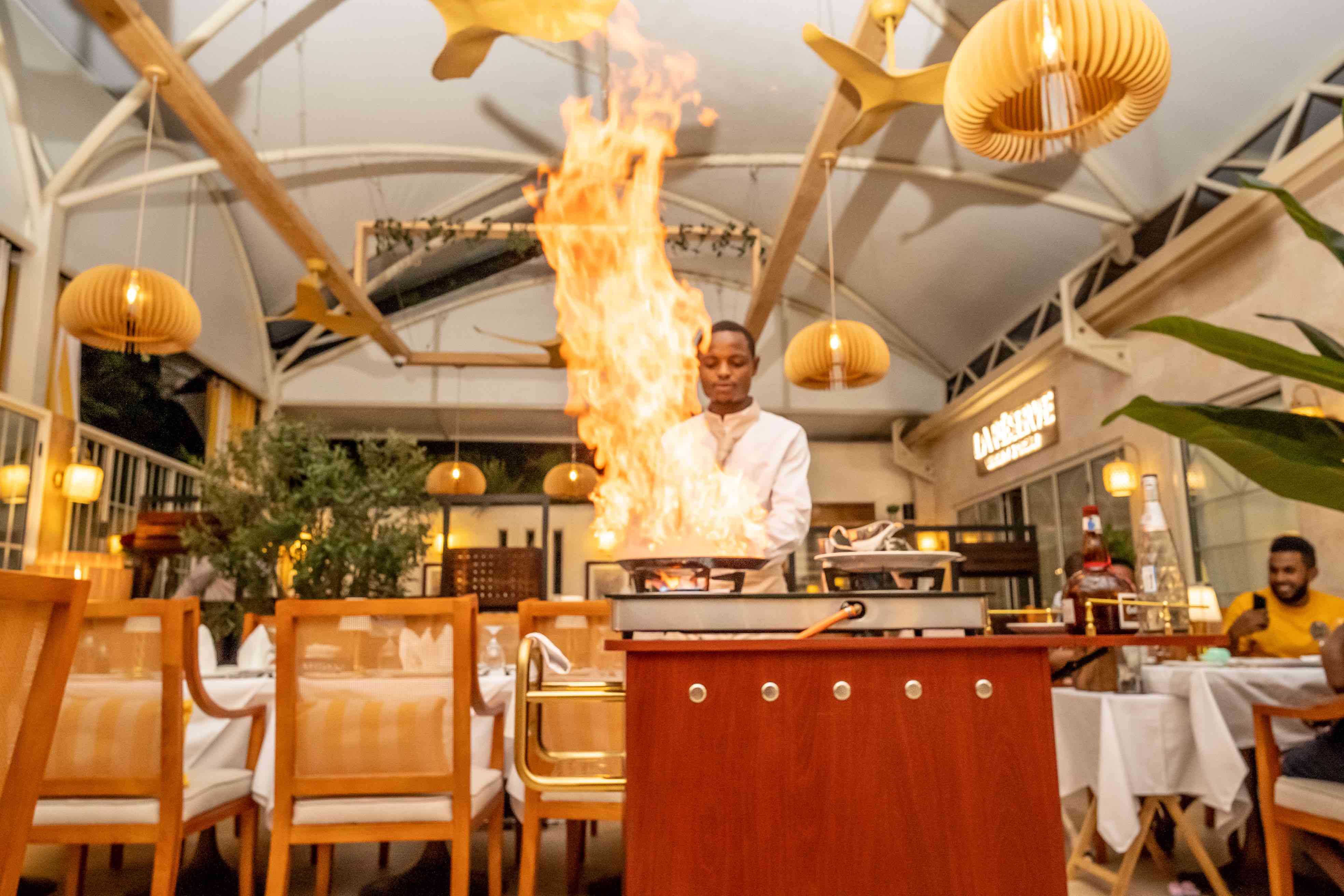
Crêpe Suzette possesses the elegance of those desserts whose name instantly evokes a scene: a pan, the fragrance of orange and a brief blue flame. That image is accurate, but it is only part of the story.
The dessert beneath the spectacle
At its heart, the dish is a composition of delicate crêpes and citrus butter. Orange brings perfume and acidity; butter carries the flavour; sugar creates gloss and depth. The balance matters before any flame appears.
Tableside flambé has become its most theatrical signature, yet the fire should remain a finishing gesture. A well-made Crêpe Suzette is memorable for its aroma, texture and harmony rather than spectacle alone.
History and legend
Several stories compete to explain the name and origin of the dessert. Recipes associated with Auguste Escoffier and later recollections by Henri Charpentier form part of its history, but the neatest origin stories are difficult to prove completely.
That uncertainty has helped the legend endure. Restaurant traditions evolve through recipes, dining-room performance and stories repeated from one generation to the next.
A classic that still feels alive
Crêpe Suzette survives because it brings kitchen craft and hospitality together. Prepared with precision and served at the right moment, it gives the whole table a final shared memory of the evening.
 9 September 2026
 8 September 2026