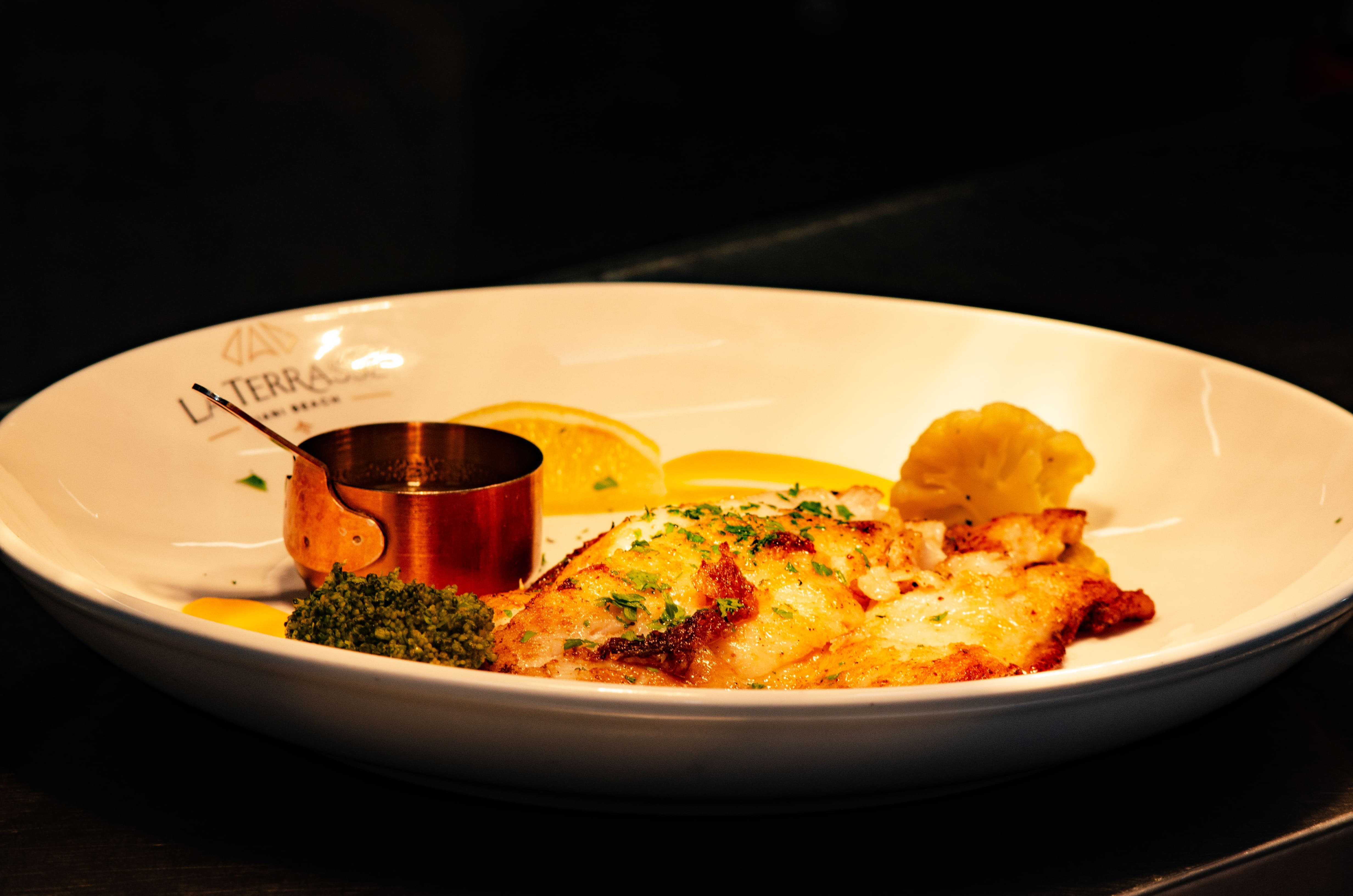
French plating is less about rigid rules than clear, ingredient-led composition. Learn practical ways to create balanced, elegant plates at home with thoughtful use of space, sauce, colour and garnish.
The story
The Art of French Plating: Simplicity, Balance and Elegance
French plating is often mistaken for a set of strict rules: a white round plate, a precisely placed protein, a scattering of tiny leaves. In practice, it is less a fixed visual formula than a way of thinking. Contemporary French presentation differs across regions, restaurants and individual chefs, yet it often returns to the same qualities: precision, clarity, proportion and a composition led by the ingredients themselves.
The aim is not to make dinner look too precious to eat. It is to make the meal legible at a glance: what is the central ingredient, what accompanies it, where is the sauce, and how will the flavours come together on the fork? At home, that approach can make a simple roast chicken or piece of fish feel considered without requiring specialist equipment.
Begin with the plate
A plate is a frame, not a stage set. Its shape, scale and colour should support the food rather than compete with it.
A broad, pale plate gives colourful vegetables and a glossy sauce room to stand out. A dark or richly coloured plate can be beautiful, but it asks more of the composition: pale foods may disappear against it, while a busy pattern can distract from delicate details. Bowls and shallow dishes are especially useful for preparations with broth, jus or spoonable sauces, because they keep liquid where it belongs.
Size matters too. A large plate can lend a modest portion a sense of generosity when it is used with intention, but too much empty surface can make food appear lost. Conversely, crowding a small plate makes even good cooking feel heavy and hurried. Choose a vessel that gives each component a place while leaving a little breathing room.
Practical details are part of good presentation. The plate should be spotless, including its rim. Serve hot food on a comfortably warm plate when appropriate, and cold dishes on a cool one. Neither should be so hot or cold that it is unpleasant to hold or affects the food unnecessarily. Most importantly, choose something guests can eat from with ease; a dramatic vessel is of little use if it traps sauce in corners or makes cutting difficult.
Give the eye a clear focal point
Every successful plate has a point of emphasis. Usually, that is the principal ingredient: the roast fish, a slice of chicken, a composed vegetable tart or a spoonful of risotto. Supporting elements should reinforce it, not compete for attention.
Imagine a fillet of roast fish with spring peas and a light herb sauce. Place the fish first, slightly off-centre if you like, with its crisp skin visible. Arrange the peas and perhaps a few tender greens alongside it, rather than building a wall around it. Add the sauce where it can be gathered with each bite, without flooding the skin. The result tells a clear story: fish first, seasonal vegetables second, sauce as a connecting element.
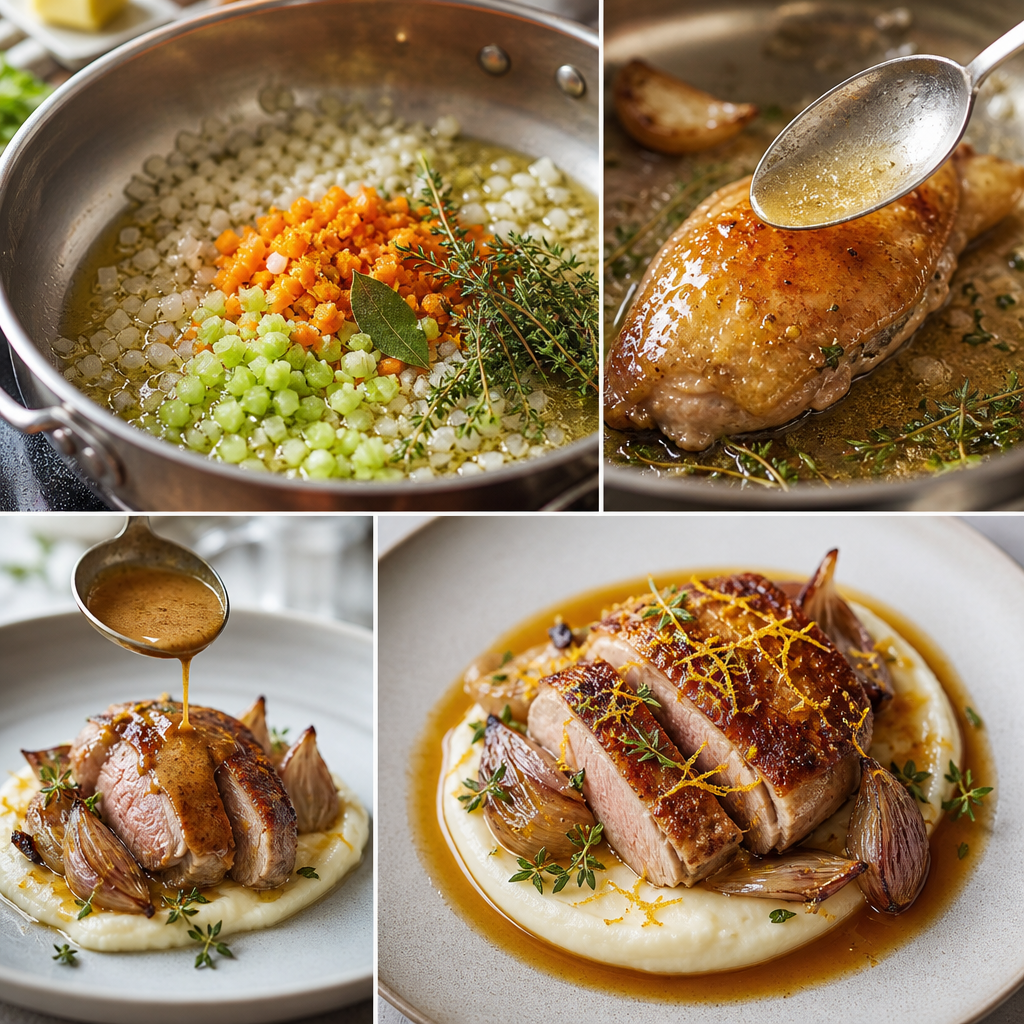
The same principle works for chicken. A neatly carved breast or a browned thigh might be paired with glazed carrots and a small spoonful of lentils. Rather than dividing the plate into unrelated piles, let the elements relate to one another. A little overlap can suggest generosity; complete concealment usually does not.
Balance proportion, weight and space
Balance is not the same as symmetry. A perfectly centred arrangement can feel calm and formal, while an off-centre composition may feel more relaxed and alive. Both can be elegant. What matters is visual weight: a dark, dense mound of lentils carries more presence than a few pale leaves, just as a large piece of fish carries more weight than a delicate sauce.
Use that awareness to avoid one side of the plate feeling overloaded. If the main element sits to the left, a vegetable garnish or a sweep of purée can provide a quiet counterweight on the right. You do not need to follow a numerical rule or a prescribed clock-face position. Let the food determine the arrangement.
Negative space—the intentionally empty area of the plate—is equally important. It creates clarity and makes the ingredients easier to distinguish. Empty space should feel deliberate, not accidental: it is the pause around a well-chosen phrase.
Height can add interest, particularly when one element naturally leans on another. A small nest of greens against a piece of chicken, or crisp shards resting on a purée, can give the plate dimension. Use it sparingly. Towers are difficult to eat, and height for its own sake often turns an inviting meal into an obstacle course.
Use colour, texture and shape with restraint
The most appealing plates often rely on natural contrast. Think of golden chicken skin against green beans, ivory cauliflower purée beside deep-red beetroot, or a pale fish fillet with bright herbs and a translucent lemony sauce. Seasonal produce is especially helpful because it brings colour that feels appropriate to the dish rather than added for decoration.
Texture deserves the same attention. A soft braise benefits from something crisp: toasted breadcrumbs, a wafer-thin slice of radish, or vegetables cooked to retain a little bite. A crisp croquette may need a smooth purée or glossy sauce to soften the experience. Contrast gives each mouthful shape.
Varying forms can help as well: a sliced carrot, whole peas, a spooned purée and a cleanly cut portion of fish create visual rhythm. But restraint is essential. If every component is brightly coloured, crunchy, glossy and intricately cut, the plate becomes noisy. Let one or two contrasts do the work.
Treat sauce as part of the composition
In French cooking, sauce is often integral to the dish, not an afterthought. On the plate, it should be placed with the same care as the main ingredient.
A shallow pool can cradle tender fish or a piece of meat that benefits from moisture. A spooned sauce can sit beside or partly beneath the main element, inviting the diner to combine it with each bite. A brush or small streak can be effective with a thicker purée or concentrated reduction, though it should still provide enough sauce to taste rather than merely decorate.
Sometimes the best choice is to serve sauce separately in a small warmed jug. This is particularly useful when preserving a crisp surface matters, such as roast potatoes, fried chicken or skin-on fish. The guiding question is simple: will this placement improve the eating? If sauce makes a crisp element soggy, obscures careful browning or splashes untidily across the plate, choose another approach.
Garnish only when it earns its place
A garnish should be edible, relevant and flavourful. A sprig of dill belongs with salmon because it contributes aroma and taste; finely sliced chives can lift an omelette; toasted hazelnuts can add welcome crunch to a squash dish. Each should have a reason to be there.
Avoid inedible flowers, random herb sprigs and decorative clutter. If a diner must remove it before eating, or if it tastes unrelated to the meal, it is not improving the plate. A final touch may be as simple as lemon zest, a few drops of good olive oil or freshly ground pepper. Often, less is more persuasive.
A practical method for plating at home
Plating is easiest when you make a small plan before the food reaches the table. You do not need to sketch a restaurant-style design; simply decide what will lead, what will support it and where the sauce belongs.
1. Plan the composition. Choose the plate and picture the placement of the main item, vegetables or starch, and sauce.
2. Prepare the components. Have garnishes, serving spoons and a clean cloth ready. Keep food at an appropriate serving temperature while you finish the other elements; do not leave perishable dishes sitting out longer than necessary.
3. Place the main element first. Set it down confidently and keep its best surface visible: browned skin, a glazed top or a neatly carved face.
4. Add supporting elements. Spoon or arrange vegetables, purées and grains in a way that gives the main ingredient room.
5. Apply the sauce. Pool, spoon or serve it alongside according to the texture you want to preserve.
6. Finish with purpose. Add an edible herb, a crisp element, zest or a final sheen of oil only if it improves flavour or texture.
7. Wipe the rim. A clean rim is one of the simplest signs of care.
8. Serve immediately. The finest arrangement cannot compensate for food that has gone lukewarm or lost its crispness.
Before you serve
Take ten seconds to check the plate:
Is the food at the right temperature?
Does the portion look satisfying rather than crowded or sparse?
Is the rim clean?
Is the focal point clear?
Is every garnish edible and relevant?
Can the diner easily reach and combine every component?
French plating, at its most useful, is an exercise in attention rather than display. It asks you to notice colour, texture, proportion and the path of a fork through the dish. Elegance does not depend on expensive tableware, elaborate tweezers or complicated tricks. It comes from choosing a few good elements, placing them with care and knowing when the plate is finished.
 17 September 2026
 16 September 2026